A Former Prosecutor Explains the Worker Abuse Problem in California
California’s temporary workforce has expanded rapidly in recent years, with businesses increasingly relying on staffing agencies to fill seasonal, warehouse, construction, and manufacturing jobs.
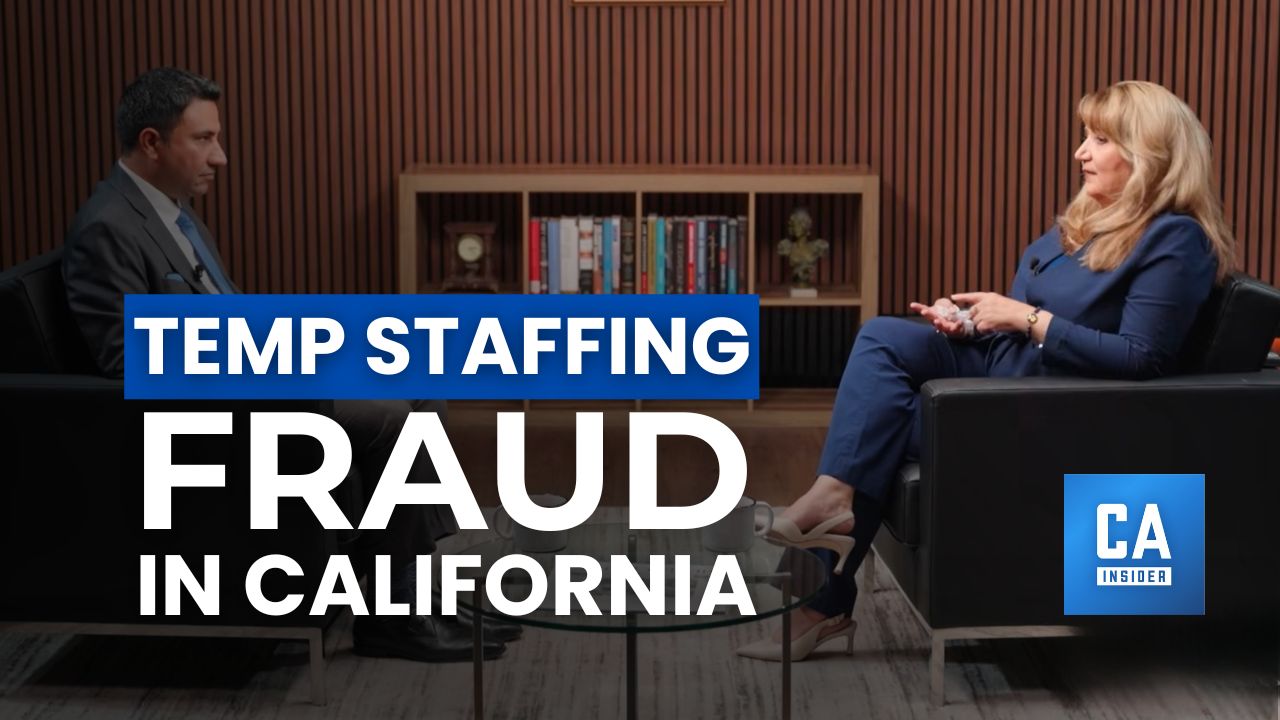
While many staffing firms operate responsibly, some industry observers say the lack of oversight in certain sectors has allowed abusive practices to emerge. In a recent episode of California Insider, host Siamak Khorrami spoke with former Orange County Senior Deputy District Attorney Shaddi Kamiabipour about how staffing arrangements can sometimes leave workers vulnerable.
Interview Transcript
Siamak Khorrami (Host):
We want to talk about a phenomenon happening in California and nationally.
People are going through agencies to get jobs, and there are reports of questionable practices affecting workers employed through staffing agencies.
Can you tell us what's happening?
How Temporary Staffing Became Widespread
Shaddi Kamiabipour:
A lot of it really started with large companies that rely on seasonal jobs.
You have seasonal jobs, manufacturing jobs, warehouse jobs. After the pandemic especially, temporary jobs became much more available.
Many employers don't want to pay the benefits associated with full-time employees year-round. Instead, they prefer staffing during peak seasons.
Whether it's construction, office work, or manufacturing, businesses often gravitate toward temporary employment to fill staffing gaps.
Wage Theft and Payroll Tax Concerns
Shaddi Kamiabipour:
As a prosecutor, one of the things we saw frequently in the staffing world was how difficult it was to prosecute many of the abuses occurring in staffing agencies.
For example, wage theft where workers are given fewer than 40 hours or sometimes paid less than minimum wage.
A company might charge the employer $20 an hour for a worker but pay the worker significantly less.
In some cases, agencies withheld payroll taxes from workers’ paychecks but never sent that money to the IRS.
Workers believed those taxes were being paid on their behalf. Later they would discover there was no record of their employment.
Why Workers Rarely Report Abuse
Shaddi Kamiabipour:
The question becomes: why don't workers complain?
If they complain, they often face retaliation.
They may simply stop receiving assignments.
For example, if a worker is injured on the job and asks for workers’ compensation benefits, they may suddenly stop getting work from the agency.
Retaliation and Workplace Pressure
Shaddi Kamiabipour:
If your livelihood depends on being invited back to the job next week, are you going to complain?
Most workers won't.
Many cases only come to light through compliance groups, unions, or organizations that speak directly with workers.
Detection rarely comes from law enforcement itself. It often comes from people on the ground who witness the practices firsthand.
The Challenge of Detecting White-Collar Crime
Shaddi Kamiabipour:
White-collar crime is designed to appear legitimate.
Paying workers and running payroll are not illegal activities.
The issue is how the system is used.
Because these activities appear legitimate on the surface, it can be extremely difficult for authorities to detect wrongdoing.
Subtle Forms of Abuse
Shaddi Kamiabipour:
Not every abuse is obvious fraud.
Sometimes it's more subtle.
For example, a worker may be promised a temporary job that leads to permanent employment.
Instead, they remain “temporary” for years.
Workers may be billed out at $25 an hour while receiving only $11 per hour and no benefits.
Temporary workers are often treated differently from permanent employees.
Lack of Oversight in the Staffing Industry
Shaddi Kamiabipour:
One of the reasons these issues occur is because there is limited oversight.
Only a few industries require special licensing for staffing agencies.
Construction and manufacturing—industries with high injury risks—often do not.
Without accountability mechanisms, abuse becomes more likely.
Challenges Facing Workers in Temporary Jobs
Siamak Khorrami:
What about the laws that apply to normal companies?
Shaddi Kamiabipour:
Direct employees have certain protections.
If the workplace is unsafe, they can file complaints with OSHA or the Department of Industrial Relations.
Anti-retaliation laws protect them.
But temporary workers exist in a different environment.
If a staffing agency simply stops assigning them work, they are still technically employed, which means they may not qualify for unemployment benefits.
Enforcement Limitations
Shaddi Kamiabipour:
For law enforcement to act, there must be a clear violation of law and a remedy available for the victim.
Without that, it's difficult for authorities to pursue a case.
The Structural Problem
Siamak Khorrami:
How big is this problem?
Shaddi Kamiabipour:
California has the largest employment market in the country and the largest temporary employment market.
Yet enforcement in the temporary employment sector is minimal.
The fact that legislators are now discussing proposals like the SAFE Act suggests the issue is significant.
Legislators often respond after problems become widespread.
The Economic Incentives
Shaddi Kamiabipour:
It's expensive to run a business in California and employ people directly.
Because of that, some employers turn to staffing agencies as a way to shift responsibility.
California has strong employee protections, which is positive, but there are limited incentives for employers to maintain full-time staff.
Final Observation
Shaddi Kamiabipour:
The balance is gone.
Many laws exist to protect workers, and those protections should remain.
But there also needs to be incentives or disincentives for employers not to shift liability to staffing agencies.
Otherwise, employers will continue to gravitate toward transferring liability to temporary agencies instead of carrying that liability themselves.
Why This Matters
Temporary workers often rely on staffing agencies for continued job placements. According to Kamiabipour, this dynamic can discourage workers from reporting workplace issues because doing so may reduce future job assignments.
As the temporary workforce grows, some industry experts argue that stronger oversight may be needed to protect workers and ensure fair competition among staffing firms.
This article contains verbatim transcript excerpts from the interview “Bad Actors Are Infiltrating California's Staffing Industry | What's Happening?” featured on California Insider, hosted by Siamak Khorrami.
Original reporting and video produced by California Insider:
https://californiainsider.com/california-news/videos/california-insider-show/californias-staffing-industry-has-a-fraud-problem-whats-happening-5997580
Watch Shaddi Kamiabipour's interview here: