California’s Staffing Fraud Problem Is Bigger Than Most People Realize
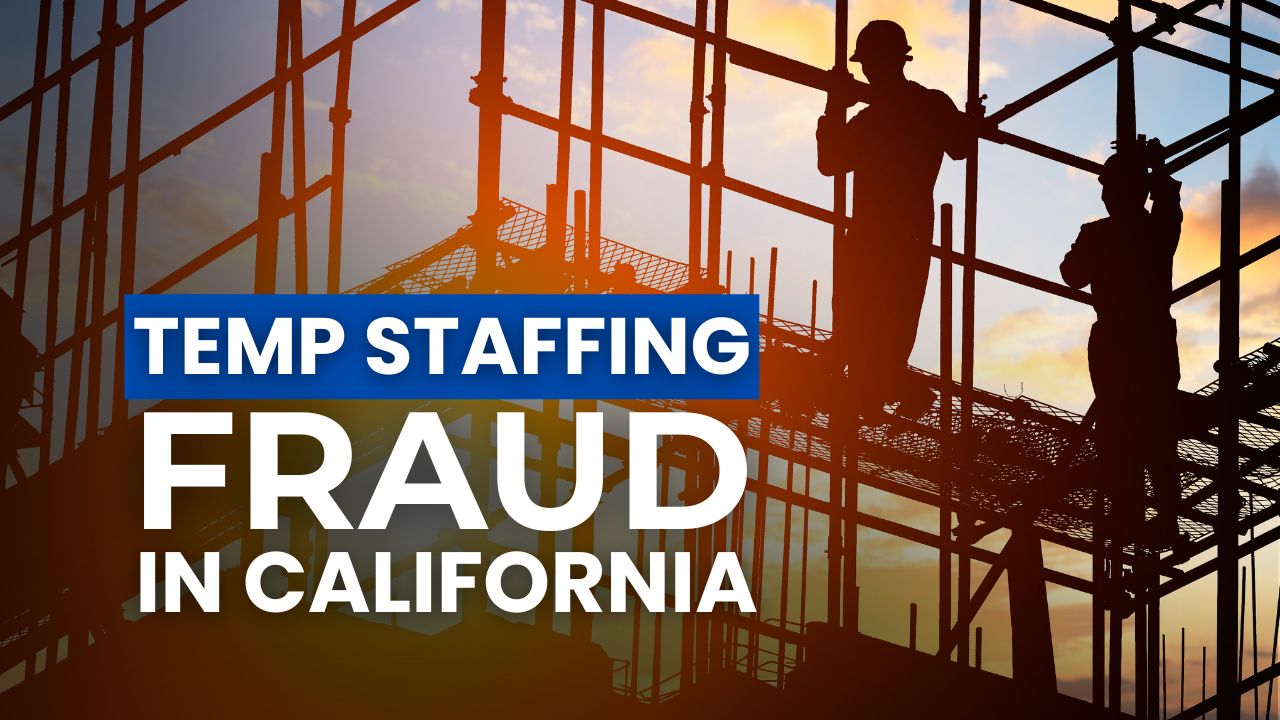
California has one of the largest labor markets in the United States. Within that system, the temporary staffing sector has grown rapidly, providing businesses with flexible labor while helping fill seasonal or short-term workforce gaps. But according to experts and former prosecutors, the same system that provides flexibility has also created an opportunity for abuse.
A recent discussion featured on California Insider highlights how gaps in oversight have allowed fraudulent staffing operations to flourish. These operations often bypass workers’ compensation coverage, manipulate payroll reporting, and leave both workers and legitimate businesses vulnerable.
The problem is not just about individual bad actors. It reflects a structural issue within the staffing industry where enforcement struggles to keep pace with increasingly sophisticated schemes.
A System Built on Flexibility and Exploited by Fraud
Temporary staffing became especially common after the pandemic, when businesses faced unpredictable demand and workforce shortages. Instead of hiring permanent employees, many companies turned to staffing agencies to provide workers as needed.
In legitimate arrangements, staffing companies act as the employer of record. They are responsible for payroll taxes, workers’ compensation coverage, and compliance with labor regulations.
However, according to experts interviewed in the California Insider report, fraudulent operators have learned to exploit the system by creating complex structures that hide liability and avoid regulatory scrutiny.
“It is now significantly more profitable and less risky to engage in workers’ comp fraud than it is to rob a bank.”
— Mike Dimino, staffing industry expert, via California Insider
This observation underscores how profitable fraud can become when oversight mechanisms fail to keep pace with industry growth.
Workers Often Carry the Risk
When staffing agencies operate without legitimate insurance or payroll compliance, the workers assigned through those agencies often bear the greatest consequences.
Workers may believe their taxes are being withheld properly, only to discover later that those payments were never submitted to government authorities. Others may find themselves injured on the job without valid workers’ compensation coverage.
In those cases, responsibility may fall to public safety nets or trust funds intended to protect workers when employers fail to meet their obligations.
Former prosecutor Jennifer Snyder emphasized how widespread staffing has become in California’s labor market.
“According to the American Staffing Association, there are more than 1.9 million employees in California that work through staffing agencies… That means almost 10 percent of the non-farm workforce in California is involved in staffing.”
— Jennifer Snyder, former prosecutor, via California Insider
Despite the size of the industry, staffing agencies in many sectors are not required to meet the same licensing or registration requirements expected in other high-risk industries.
The Hidden Cost to Legitimate Businesses
Fraud in staffing does not only harm workers. It also places legitimate companies at a severe disadvantage.
Responsible staffing firms that follow the law must pay workers’ compensation premiums, payroll taxes, and administrative costs. Fraudulent operators, however, can undercut those prices by ignoring these obligations.
As a result, businesses seeking cheaper labor may unknowingly contract with agencies that are operating outside the law.
Over time, this creates a market imbalance where legitimate staffing companies struggle to compete while illegal operators gain market share.
Industry observers warn that when this happens, the damage spreads throughout the entire labor ecosystem.
How Fraud Schemes Work
Fraudulent staffing operations often rely on complex structures designed to avoid detection.
Some schemes involve using falsified or borrowed insurance certificates to appear compliant. Others involve layering multiple staffing entities together so that the true employer becomes difficult to identify.
These structures make enforcement extremely challenging.
Investigators must untangle financial records, corporate registrations, and employment relationships that may span several entities and jurisdictions. By the time authorities can prove wrongdoing, the companies involved may already have dissolved and reappeared under new names.
This is one reason why staffing fraud is frequently associated with the broader shadow economy, where businesses operate with limited transparency and accountability.
A Call for Oversight and Accountability
Advocates argue that California’s lack of licensing and centralized oversight for staffing agencies allows repeat offenders to rebrand, reorganize, and continue operating with little interruption.
“Fraud in the staffing industry doesn’t stop at insurance—it frequently expands into payroll tax fraud, financial deception, and organized abuse of the system,” said Robert Reid, Executive Director of POWER.
“Without meaningful oversight, the same schemes repeat, workers are harmed, and honest businesses pay the price.”
Without stronger safeguards, experts warn that the current system will continue rewarding the very actors who undermine worker protections and fair competition.
Why the SAFE Act Matters
One proposed step toward addressing this issue is the SAFE Act (Staffing Agency Fair Employment Act).
The legislation would require staffing companies operating in California to register and provide key information about their operations, including proof of legitimate workers’ compensation insurance.
The goal is not to burden legitimate staffing companies but to create a basic level of transparency so regulators, businesses, and workers can verify who is operating responsibly.
As Jennifer Lentz-Snyder explained in the California Insider interview, the first step toward accountability is simply knowing who is operating within the system.
“You have to know who it is that’s responsible for the employees who are being assigned to these jobs… You have to know who is financially interested and that they are properly insured.”
— Jennifer Snyder, via California Insider
Registration and verification requirements would make it significantly harder for fraudulent operators to hide behind shell companies and fabricated documentation.
The Stakes for California’s Workforce
The staffing industry plays a vital role in California’s economy. When operated responsibly, it provides flexibility for employers and opportunity for workers.
But when fraud is allowed to flourish, the consequences extend far beyond a single company or contract. Workers lose protections. Legitimate businesses lose competitiveness. And taxpayers often absorb the financial fallout.
Closing these loopholes is not just about enforcement. It is about protecting the integrity of California’s labor market and ensuring that honest businesses and workers are not pushed aside by those willing to exploit the system.
This article incorporates reporting, interview excerpts, and transcript material from the California Insider video feature: “California’s Staffing Industry Has a Fraud Problem | What’s Happening?”
Quotes attributed in this article originate from interviews featured in the video.
Original source: https://californiainsider.com/california-news/videos/california-insider-show/californias-staffing-industry-has-a-fraud-problem-whats-happening-5997580